A sequential gearbox is the single biggest shifting upgrade you can make to a race car. It is also more than a gearbox swap: depending on your starting point, the conversion touches the bellhousing, the propshaft, the shifter and the electronics — and sometimes none of them.
We build sequential dogbox transmissions in Sievi, Finland, and the questions below are the ones our customers actually ask before ordering. This guide walks through what really changes in the car, what you can keep, and which conversion route fits which build.
What actually changes in the car
A complete sequential conversion has five parts. How many of them apply to you depends entirely on what is in the car now.
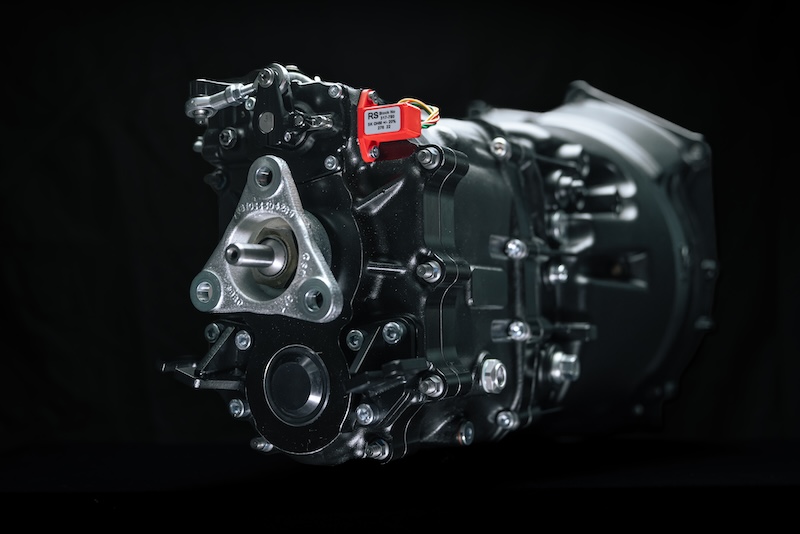
- The gearbox itself. A sequential dogbox replaces the synchromesh internals with straight-cut gears and dog engagement, and replaces the H-pattern selector with a rotating drum — pull for the next gear, push for the previous one. The GearMotive Z-SEQ-5 Sequential packages this into the dimensions of the original BMW ZF S5D, so on the ZF platform the gearbox swap is genuinely bolt-on.
- The bellhousing. This is where conversions differ the most. On a BMW ZF platform the original S5D bellhousing carries over. For engine swaps, the traditional options are an adapter plate (adds stack height, often forces flywheel and clutch changes) or a welded bellhousing (compact, but permanent). The NG-SEQ-5 Sequential exists because neither compromise is good: its modular bolt-on bellhousing fits BMW M50, Toyota JZ and GM LS engines while keeping the clutch and input shaft geometry correct.
- The propshaft. If the new gearbox is shorter or longer than the old one, or the output flange pattern differs, you either modify the propshaft or use a prop shaft adapter that matches the original flange and length. When replacing a larger OEM box (a Getrag, or a ZF GS5-39), an adapter usually saves the propshaft.
- The shifter. The sequential shifter installs in the original shifter position. The GearMotive shifter is self-centering and carries integrated shift-cut sensing for flat shifting.
- The electronics. Strictly optional — the gearbox shifts without any — but a gear display, shift-cut control and a ready-made wiring kit are what make a sequential feel like a factory system. The GearMotive ECM connects the shifter, gear position sensor and display, and integrates with a compatible aftermarket ECU for flat shift.
Do you still need a clutch?
Yes — a sequential gearbox has a completely normal clutch, and you use it for pulling away, for reverse and usually for downshifts.
What changes is the upshift. With shift-cut electronics, the strain gauge in the shifter senses the pull on the lever and momentarily cuts engine power, so the dogs disengage and the next gear engages under full throttle — a flat shift, no clutch, no lift. Without electronics you shift with a brief lift or a quick clutch dab; the dog engagement itself is far faster and more positive than any synchromesh.
Just as importantly, a conversion does not automatically mean a new clutch. On the BMW ZF platform the GearMotive Sequential keeps the original clutch, mounts and driveshaft untouched. On the NG-SEQ-5 platform the modular bellhousing is designed to retain existing flywheel and clutch configurations where possible, and supports BMW OEM-style clutch forks as well as Tilton and other hydraulic release bearings. A clutch upgrade is a power question, not a sequential question.
Sequential vs H-pattern: when the change pays off
An H-pattern dogbox already gives you the durability and the fast, synchro-free engagement of dog gears. What the sequential adds is the shift itself: no gate to find, the same lever movement every time, flat shifts under power, and no possibility of grabbing the wrong gear at the end of a straight.
When it pays off:
- Drifting — gear changes mid-drift without settling the car.
- Rally and rallycross — full-throttle shifts on loose surfaces, hands back on the wheel sooner.
- Circuit and drag — consistent, repeatable shifts where tenths accumulate.
When the H-pattern dogbox remains the right call: class rules that require it, budgets where the difference funds tyres and seat time, and builds where the driver simply prefers a gate. The gearset inside both GearMotive boxes is the same proven design, tested beyond 1100 Nm — the choice is about shifting, not strength.
What it costs beyond the gearbox
The gearbox price is the headline, but a realistic conversion budget has a few more lines. None of them are surprises if you plan for them:
- Bellhousing — on the ZF platform, a suitable S5D bellhousing if you do not already have one (the product page lists the nine compatible ZF part numbers, petrol and diesel); on the NG-SEQ-5 platform, the engine-specific modular fitment.
- Propshaft — an adapter, or shortening/rebalancing work if lengths differ.
- Shifter and electronics — shifter, and optionally the display, ECM and wiring kit for flat shift and gear position.
- Clutch — only if your power level demands it; likewise the Heavy Duty input shaft above roughly 500 hp.
- Installation — gearsets are assembled at GearMotive into your casing or ours; the in-car installation is straightforward on bolt-on platforms but is still a day in a workshop, not an afternoon in a driveway.
Prices for every component are listed openly on the product pages — taxes, import duties and shipping are not included, so budget those separately if you are ordering from outside the EU.
Which route fits your build — and what each one costs you in work
Nearly every enquiry we get is one of these five builds. Find yours:
- You have a BMW ZF S5D casing and build gearboxes yourself. The cheapest route into a GearMotive dogbox: order the gearset only, fitted into your own casing. You handle the casing condition, assembly logistics and everything around it — the product pages state exactly what the gearset price does and does not include.
- You have a Getrag box and build yourself. Same as above, plus a used ZF casing and a prop shaft adapter to match the Getrag flange — the adapter keeps your existing propshaft.
- Any rear-wheel-drive car, and you want a straightforward H-pattern. The complete H-pattern dogbox, modified and ready to fit.
- A BMW with a ZF box (or a GearMotive H-pattern) and you want a sequential. The Z-SEQ-5 Sequential Dogbox — a bolt-on replacement for the original S5D: clutch, mounts and driveshaft stay.
- A swapped or tilted engine — 2JZ, LS, or an M50 build beyond the ZF platform — over 500 hp, raced actively. The NG-SEQ-5 Sequential: one core gearbox, a modular engine-specific bellhousing, three installation angles, and trackside serviceability designed in from the start.
If your build does not fit any of these — or fits two of them — tell us what is in the car: engine, current transmission and power level are enough for us to recommend the right route and quote it.
If you like to see GearMotive gearboxes in action first, visit our videos page or the #GearMotiveCrew reference page to see how our customers race with them.